
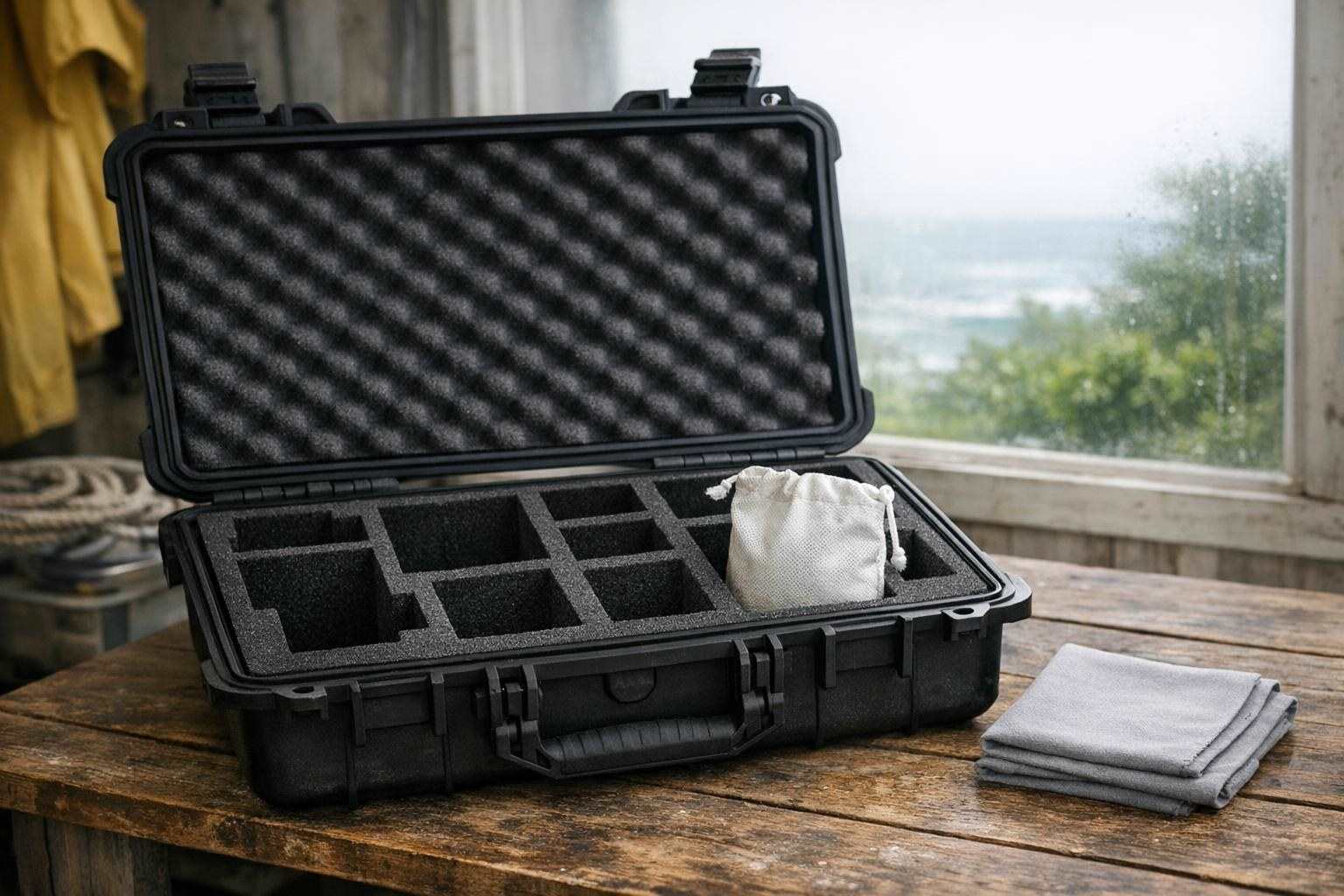
We are aware that firearms and the accompanying equipment can suffer greatly from the effects of coastal air. Cases, firearms, optics, tools and other items seemingly unaffected after a shooting trip can develop corrosion in seams and under finishes, or even within closed cases. A few simple storage options can prevent damage from occurring in the first place, and make inspection for any signs of damage a relatively straightforward exercise.
Start with the symptoms you can actually see
It is easy to miss early signs of rust on your shooting equipment. Rust typically appears as orange or reddish discoloration on metal parts, dull patches, powdery residue or even pitting on surfaces. Other indicators of potential rust are sticky controls or musty smelling cases. In particular, you may notice white or greenish deposits in crevices where metal parts meet dissimilar materials.
Do not underestimate a slight haze on an optic, a damp storage liner or a case that feels cool to the touch. Moisture may be collecting in hidden areas of a storage container, such as beneath foam, inside around fasteners, or along edges of a container. Areas on a firearm that have been exposed to sea air may develop problems on small items such as sling hardware, magazines, tools, etc. before symptoms appear on the main surface of the firearm itself.
In ordering to complete a search for possible damage to firearms, make sure that all guns are unloaded. Ammunition should be stored separately from firearms. Refer to the owner's manual for the specific gun being searched for instructions on disassembling it for inspection. If parts appear to be damaged, severely pitted, clogged or difficult to operate in any way, do not attempt to clean them. Instead, contact a gunsmith who is qualified to repair firearms, or the manufacturer, for repair or possible replacement.
Make storage work against moisture
Store your firearms in secure gun storage. But a locked case alone does not solve a damp-air problem. The container you use for storing your equipment needs to be sealed tightly in order to protect your guns from outside moisture, but it will also trap the moisture already in the cases, in the clothes you stored in the case, and on the guns themselves. Allow time for these items to dry in a safe environment as recommended by the manufacturer. Do not use heat or some 'clever' home hack to dry your firearms or equipment quickly. Such methods can cause damage to the finishes, to seals, to optics and to some types of polymer.
MCCs and reusable moisture absorbers are not maintenance items. Store them where they are to be used, follow the recommended monitoring for the MCC and replace or re-charge as required. Do not treat a used MCC as though it were a perpetual item of protection.
Storing your firearm in a closed soft case in your home is similar to storing it in a sealed bag in your car. When you store a firearm for extended periods of time in a closed soft case, it is wise to first verify that the case is suitable for storage of that type, and then store it in a room with suitable storage conditions.
Protect cases, optics and small accessories
Above all, remember to open up your range case after each shooting outing and inspect its insides for any signs of dampness or other damage. Remove all targets and used cleaning patches. Then wipe off any exterior residue from equipment that can be cleaned such as hard case walls, but never use cleaning products on lenses, rubber or other electronic equipment parts. Always refer to the manufacturer's cleaning advice for the best method to use.
Inspect all of your Optics for signs of damage or even moisture penetration such as fogging, water marks etc. When cleaning these products never rub any grit or salt against the lens or any other surface. Use the correct method for the specific product as detailed by the manufacturer. Do not use on any of your equipment un-approved cleaning products for hard surfaces.
Keep small items such as magazines, tools, ear protection, batteries, small parts and sling hardware in different locations to check individually for signs of moisture. Batteries should be stored according to the manufacturer's instructions and can leak and cause damage to nearby items. Keeping a simple inventory of the items you have for shooting will also highlight any that have gone missing or deteriorated.
Build a maintenance check that fits real life
Before you store your equipment, make sure that any gear that you have been using outside has a chance to fully dry. Then clean any accessible metal surfaces with a clean, dry cloth and use only the lubricant or other protectant recommended by the firearm's manufacturer. Be careful not to get any excess lubricant to collect dust or otherwise leak to other parts of your firearm.
Finally, be sure to track any recurring problems you encounter with your gear. A damp case, a certain screw or hardware discolouring, a lens fogging, etc. All of these problems point to a storage issue and need to be checked on periodically. And don't think that because you're not shooting your stuff just because it's been left to sit in a damp environment for a while that it's okay.
Be very cautious when inspecting a firearm that may have been affected by humidity and salts. Avoid any surfaces that have been affected by corrosion, unless you are certain that surface can be cleaned up. When cleaning up corrosion do not try to polish away any evidence of previous damage. There may be additional damage that is not yet visible and a competent gunsmith can inspect the item for you and advise on any additional repair or even replacement that may be required.
Know when prevention has become a decision
To determine the extent of damage to firearms and their storage cases and to make decisions regarding whether to continue to use them or to have them repaired or replaced by a firearms repair shop, all possible symptoms of moisture penetration need to be taken into consideration. Surface rust and structural rust are quite different in terms of severity and the type of repair they require. In addition to rust, damaged safety related parts and parts that become inoperative due to moisture exposure require immediate evaluation by a firearms repair shop. Most cases and accessories can have stained linings and damaged optics and container locking mechanisms replaced.
Your purchase of gun cases, firearm cabinets and other related items for gun storage can help fight moisture too. Consider what is required to check, dry out and secure a case, storage cabinet or accessory in the room where it is stored. Look for a manufacturer's maintenance guidance and don't assume that a product described as waterproof means that contents will remain completely dry for extended periods of time. Security, ventilation, suitable materials and access to check and maintain contents are all equally important.
Firearm storage and transport requirements can change over time. It is always best to check current requirements when choosing a storage container for use in different locations. In the end, securing your firearms, controlling moisture, inspecting your firearms before using them and responding to signs of potential problems in a timely manner is key to safely storing your firearms. It is generally less expensive and less trouble to take precautions to prevent problems from occurring in the first place rather than having to fix problems that could have been prevented in the first place.